


Fill ¼ plate with healthy carbohydrates
3. Fill ¼ plate with healthy carbohydrates
- Such as whole wheat roti (with bran), dalia, and millets like ragi, bajra, jowar and amaranth.
- Choose high-fiber options and have it along lean protein, for example: Jowar roti and soya-bean vegetable, egg white toast, Moong dal cheela stuffed with tofu/paneer, Ragi puffs with vegetable sprouts, amaranth-paneer upma.
- Prefer whole fruits (Apple, guava, pear, pomegranate) instead of fruit juices/purees.
Use high-fiber complex carbohydrates—they release sugar slowly and help avoid sugar spikes.
What are Fast-Acting Carbohydrates
What are Fast-Acting Carbohydrates?
- 1 tablespoon of glucose powder mixed in water, honey, or sugar
- 1/2 glass (100 ml) of sweetened fruit juice (like orange, mango, or grape juice)
- 1/2 glass (100 ml) of regular soft drink
- 1 medium banana
- 3-4 sugar toffees
- 5 glucose biscuits
15 – 15 Rule in Managing Hypoglycemia
15 – 15 Rule in Managing Hypoglycemia (American Diabetes Association)
15 – 15 Rule: This rule is commonly used in medicine for hypoglycemia management. According to this, one should consume 15 grams of fast-acting carbohydrates, wait for 15 minutes, and then recheck blood sugar, and repeat the cycle 2 times.
If this is not working even after consuming sugary drink 2 times, immediately seek help from a doctor.
2
2. Fill ¼ plate with lean protein
- Such as dals (moong,masoor,arhar), legumes (rajma/kidney beans, chana/chickpeas, lobia/black eyed peas, cowpea), green peas, soybean, besan, sattu, paneer, tofu, sprouts, amaranth seeds, chicken, egg whites, or fish.
- Supplementation of foods like cereal and pulse (4 parts of cereals :1 part of pulse ratio) can improve the protein quality and also gives satiety. For e.g; Idli, dosa, Missi roti, Khichdi, Dhokla, Khandvi etc.
- Protein helps reduce post-meal blood sugar spikes and keeps you feeling full.
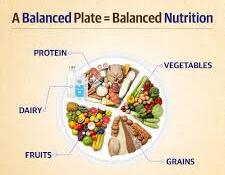
Instant Action for Hypoglycemia
Instant Action for Hypoglycemia
When symptoms appear, and blood glucose drop to < 70 mg/dL. IMMEDIATELY consume food items containing simple sugars.
- Fruit juice or sugary drinks: Half cup / 120 ml
- Glucose tablets, sugary candies: 3 – 4
- 1 spoon sugar/jaggery
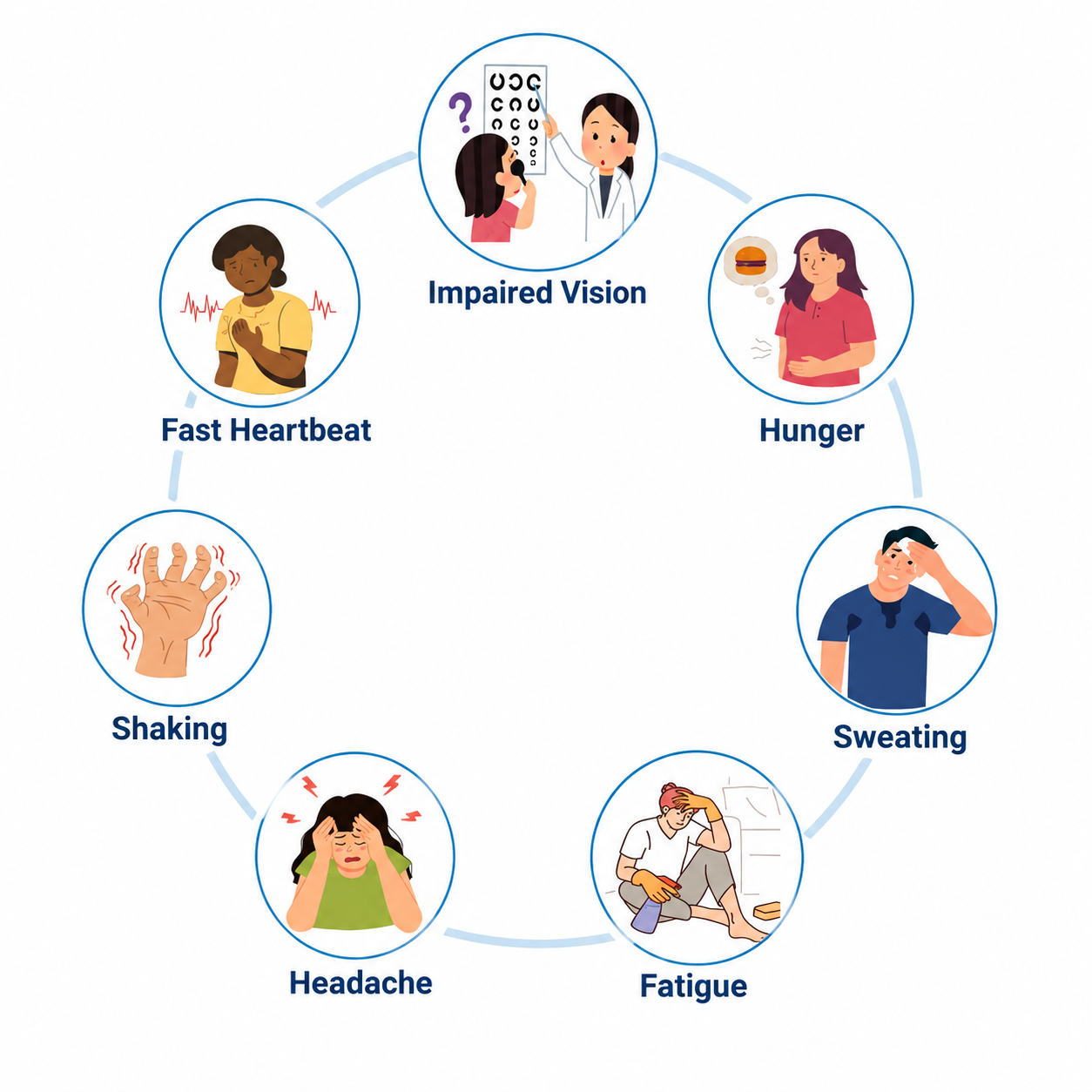
Symptoms of Hypoglycemia
Symptoms of Hypoglycemia (Low Glucose Levels)
Dietary Management
Dietary Management for High Blood Sugar
1. Fill ½ plate with non-starchy vegetables and salad
- Consume vegetables like lady finger, green leafy vegetables like spinach, mustard leaves, radish leaves, cauliflower leaves, amaranth leaves, colocasia (arbi) leaves, tomatoes, broccoli, capsicum (shimla mirch), bottle gourd (lauki), beans, cauliflower (gobhi), cucumber.
- These are low in carbohydrates and rich in fiber and nutrients.
Diabetes Plate Method Use a 9-inch plate for eating.
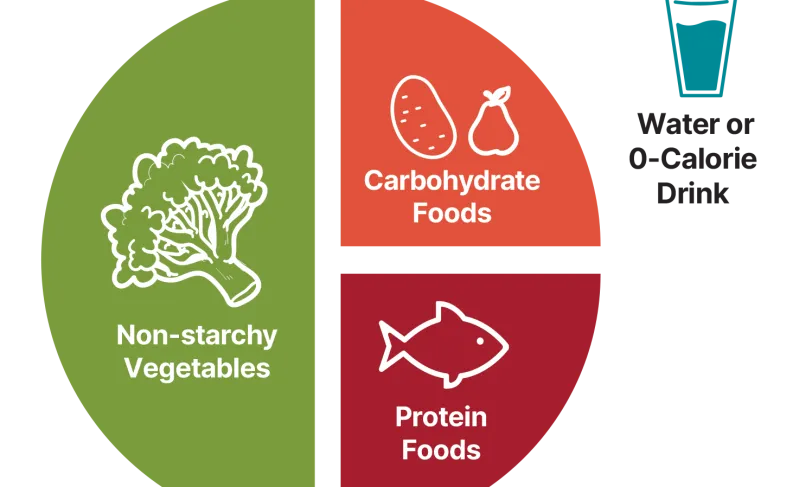
Source: American Diabetes Association, 2025
Causes of Hypoglycemia
Causes of Hypoglycemia (Low Glucose Levels)
Hypoglycemia is caused due to following reasons:
- Skipping meals or not eating enough
- Overdose of insulin or diabetes medications
- Excessive alcohol consumption
- Prolonged physical activity without proper food intake
- Other medical conditions
Consequences of Hypoglycemia
Consequences of Hypoglycemia (Low Glucose Levels)
If hypoglycemia is not treated immediately, following may happen:
- Brain damage (since the brain depends on glucose)
- Loss of consciousness
- Seizures
- Accidents or falls
- Death, in extreme untreated cases
What is Hypoglycemia
Now, there can be other situations related to blood glucose levels, which is Hypoglycemia
What is Hypoglycemia ?
- Low levels of sugar in blood, less than 70 mg/dl, is known as hypoglycemia.
- It is common for a diabetic patients to observe hypoglycemia. This happens when body glucose is depleted due to excess insulin, skipped meal and lack of exercise.