

What happens in Dyslipidemia?
Dyslipidemia means:
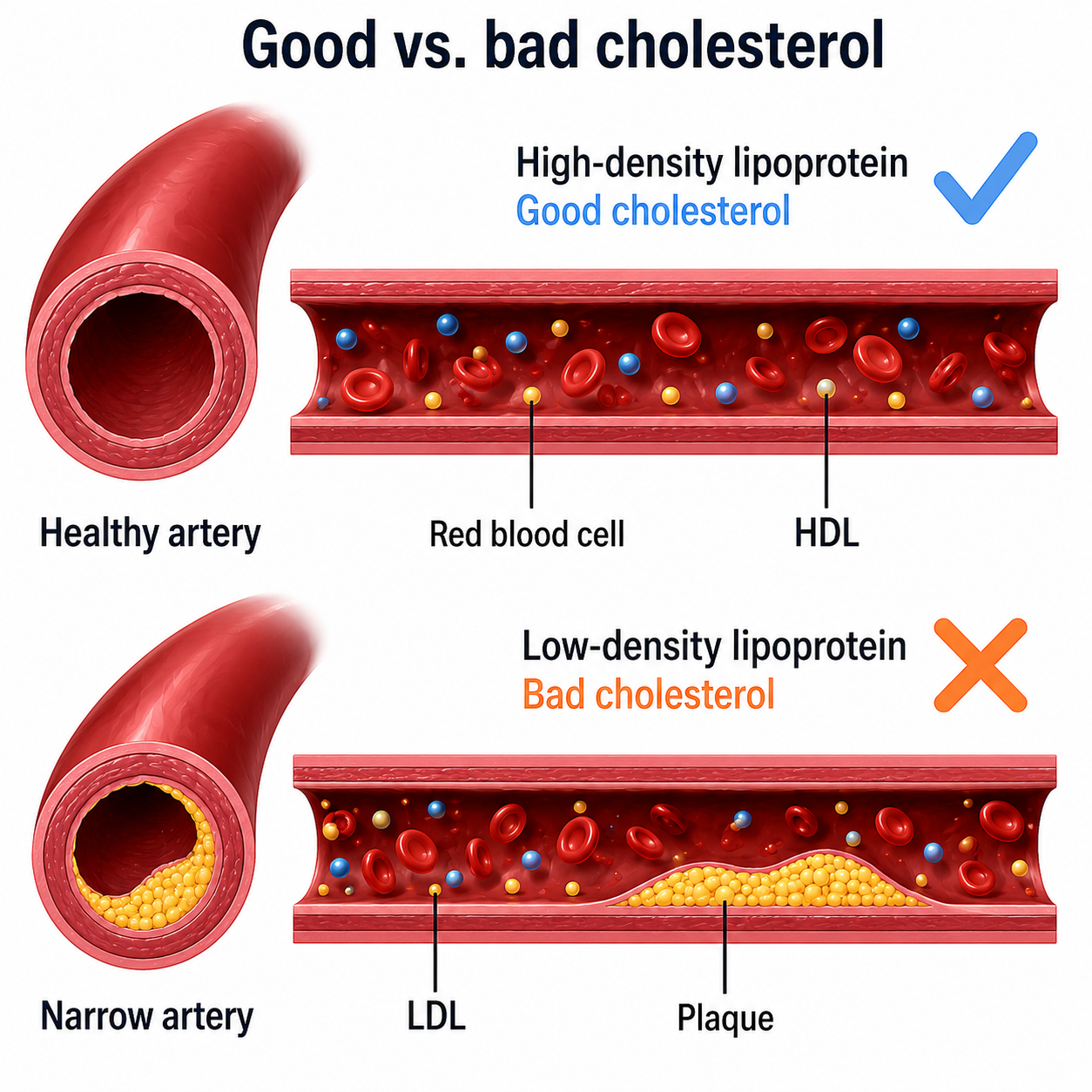
- High Low Density Lipoproteins-LDL ("bad" cholesterol)
- Low Density Lipoproteins-HDL ("good" cholesterol)
- High Triglycerides
Or, a combination of all three
What is Cholesterol?
- Cholesterol is a waxy, fat-like substance found in all cells of the body.
- It is vital for producing hormones, vitamin D, and substances aiding digestion.
- Elevated LDL cholesterol levels contribute to plaque buildup in arteries, increasing the risk of coronary artery disease and stroke.
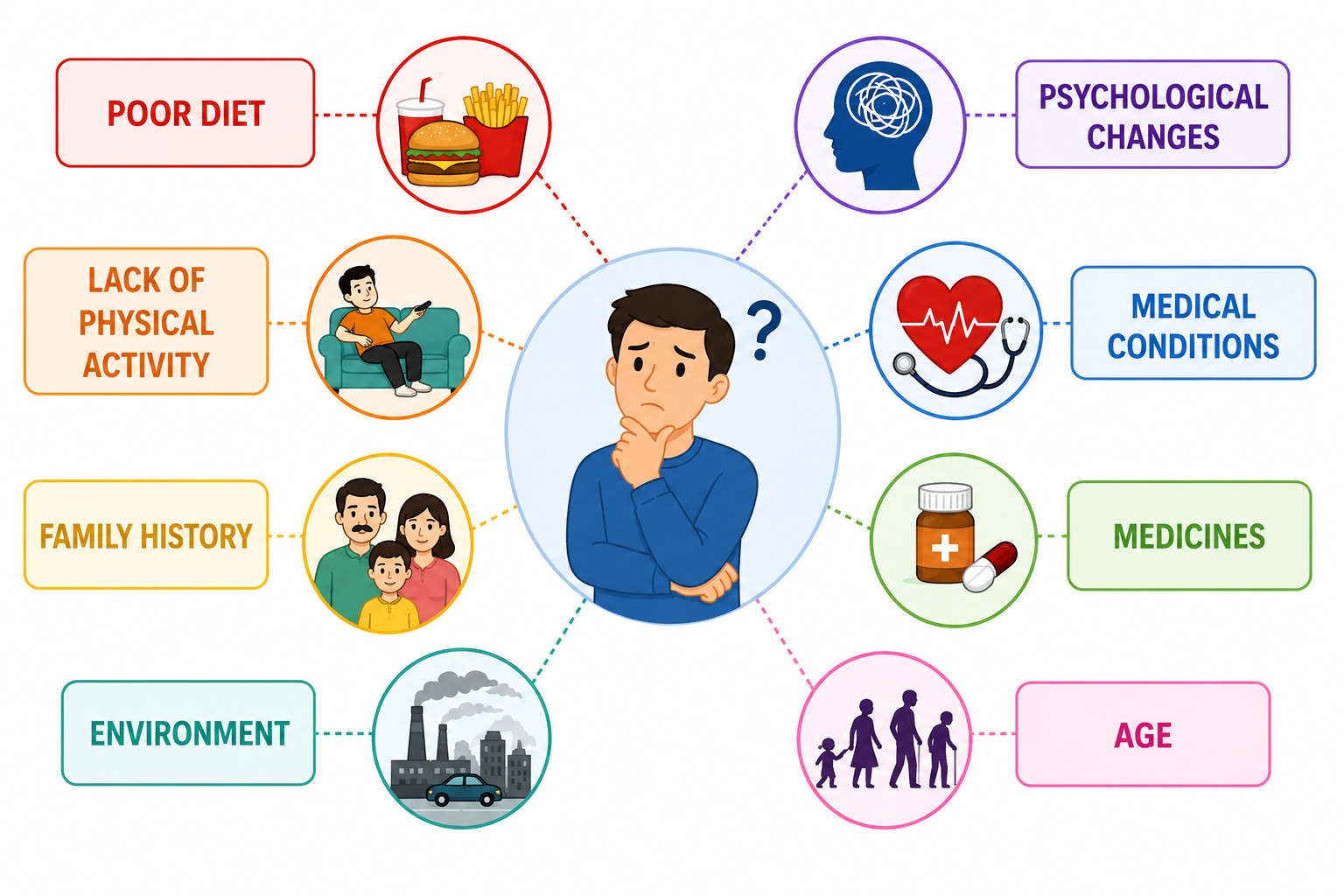
Causes of High Cholesterol
Complications of High Cholesterol
1. Atherosclerosis (Hardening of Arteries)
- Excess LDL (“bad cholesterol”) can deposit inside blood vessel walls.
- This forms fatty plaques that narrow and stiffen arteries.
- Blood flow becomes reduced.
This results in: Increased risk of heart and blood vessel diseases.
2. Coronary Heart Disease (Heart Disease)
When cholesterol deposits build up in the arteries that supply blood to the heart, less oxygen reaches the heart muscle.
This results in:
- Chest pain (angina)
- Shortness of breath
- Reduced stamina or exercise capacity
3. Heart Attack (Myocardial Infarction)
- A cholesterol plaque can rupture and form a blood clot.
- The clot can block blood flow to the heart.
Symptoms may include:
- Severe chest pain
- Sweating
- Breathlessness
- Pain spreading to arm/jaw
4. High Blood Pressure (Hypertension)
- The arteries get narrowed due to the plaque formation, and become less flexible.
- The heart has to pump harder, that ultimately increases the blood pressure.
5. Kidney Problems
Long-term damage to blood vessels may affect kidney blood supply and function.
6. Increased Risk With Diabetes- High cholesterol combined with diabetes can:
- Speed up blood vessel damage
- Increase risk of heart attack and stroke
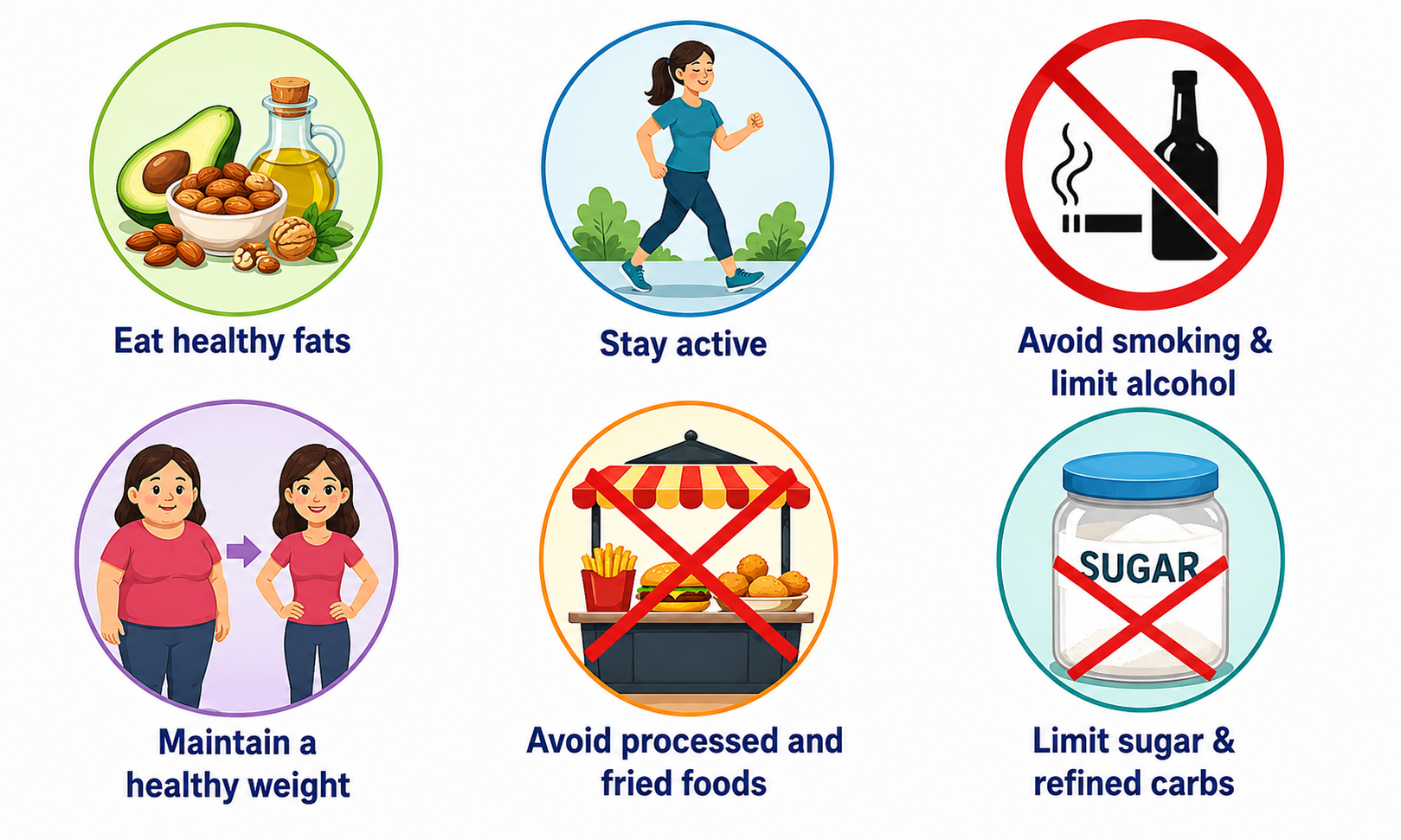
To maintain triglycerides and cholesterol at healthy levels